Introduction: The Most Expensive Lesson in Cross-Border Logistics
The LA warehouse collapse 2026 was the most severe warning the cross-border logistics industry has seen in years. In March 2026, 5 fulfillment warehouses in Los Angeles ceased operations simultaneously. Owners disappeared overnight. Warehouse doors were sealed by landlords. Over 2,000 Chinese sellers were affected, with total losses exceeding $28 million USD—and individual losses as high as $2.1 million.
This was not an isolated case of poor management. It was the inevitable result of years of destructive price competition in the industry. For every cross-border seller, this is more than a warning—it’s a $28 million masterclass in supply chain security.
Event Timeline: How $0.38 Orders Destroyed 2,000 Businesses
The Setup: “Impossible Prices” That Lured Everyone
Starting in February 2026, seller groups were flooded with advertisements like this:
“NEW LA WAREHOUSE OPENING!
$0.38 per order fulfillment!
30 DAYS FREE STORAGE! FREE UNLOADING! FREE RETURNS!
Own warehouse, operator direct—lowest prices in town!”
For sellers already operating on razor-thin margins, this was too good to pass up. Let’s do the math: If you do 10,000 orders per month and save $0.80 per order, that’s $8,000 per month—almost $100,000 per year!
Sellers flocked to these warehouses. Many moved ALL their inventory into these “bargain” facilities.
The Collapse: When the Music Stopped
It didn’t last long. By early March, sellers started noticing problems:
- Tracking updates slowed from daily to once every 3-5 days
- Customer service response went from minutes to hours, then days
- Packages that should take 3 days were taking 2 weeks or more
By mid-March, all contact persons disappeared simultaneously. Phones went unanswered. Messages were left on read. Friends in LA visited the addresses—only to find sealed doors and hundreds of abandoned containers from China.
Industry insiders later revealed all 5 warehouses were operated by the same person. He was running a classic Ponzi scheme: using new customer prepayments to cover old costs. When US customs cracked down on “ghost accounts” in March, the entire house of cards collapsed instantly. The owner liquidated what inventory he could and vanished.
The Worst Case: 8 Warehouses. All Gone.
The most heartbreaking story involves a home goods seller who, trying to “diversify risk,” split his inventory across 8 different warehouses. All 8 turned out to be operated by the same person. He lost everything—$2.1 million in inventory.
Countless smaller sellers lost anywhere from $10,000 to hundreds of thousands. Many had just stocked up for Prime Day, only to watch their inventory become “dead stock” in a sealed warehouse.
Deep Dive: Why “Ultra-Low Prices” Are Always Scams
Many sellers asked until the very end: Why can’t $0.38 be legitimate? Maybe they have some “secret efficiency” we don’t know about?
Unfortunately, no. Let’s look at the transparent math:
The Real Cost of Operating a Legitimate LA Warehouse
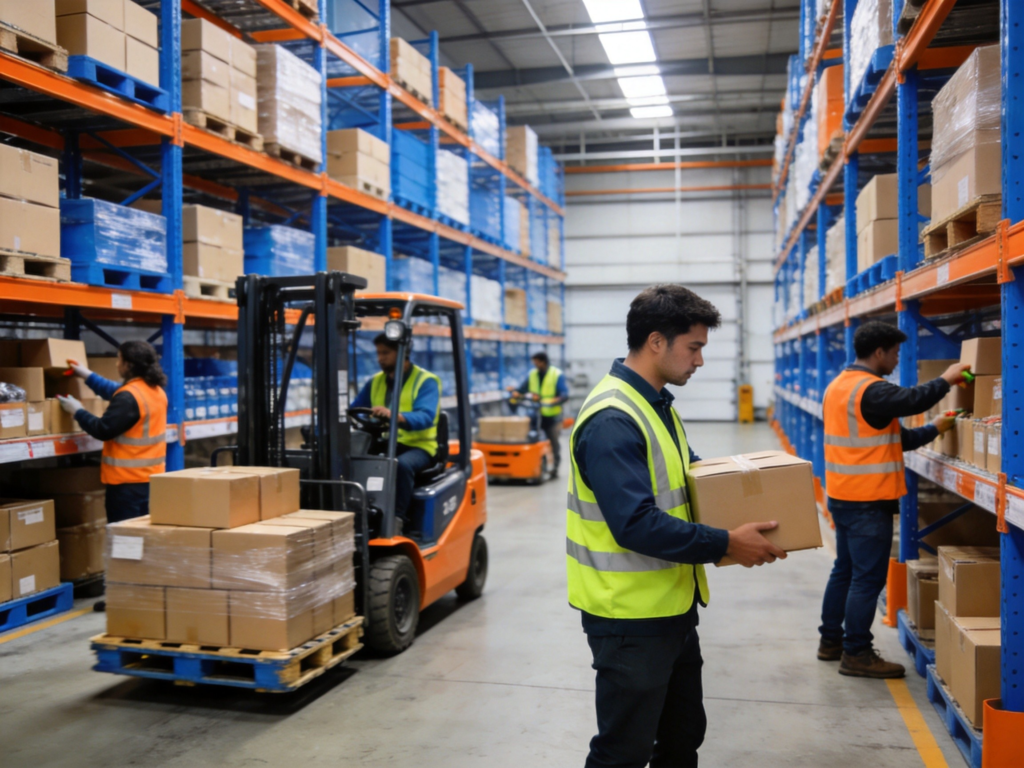
表格
| Cost Category | Cost Per Order | Notes |
|---|---|---|
| Warehouse Rent | $0.20-0.30 | LA industrial real estate prices keep rising |
| Labor Costs | $0.40-0.60 | Picking, packing, labeling—American labor isn’t cheap |
| Utilities/Equipment/Insurance | $0.15-0.25 | Forklifts, shelving, WMS systems, fire safety |
| Management/Customer Service/IT | $0.15-0.20 | China support team, system maintenance |
| HARD COST TOTAL | $0.90-1.35 | AND THIS IS BEFORE PROFIT! |
There you have it. Hard costs alone are $0.90-$1.35 per order. Any quote below $1 is a money-losing proposition.
At $0.38, they can’t even cover labor costs. Unless, of course, they never intended to run a legitimate business.
The 3 “Business Models” of Cheap Warehouses (None Are Legitimate)
How do these cheap warehouses make money? Three ways, none good:
Model 1: Ponzi Scheme (Most Common)
New customer money pays old costs. Keep growing until you can’t—then disappear with everything.
Model 2: Gray Market Operations
- Using “ghost accounts” for shipping (stolen or fraudulent carrier accounts—get caught and your whole shipment vanishes)
- Undervaluing goods to avoid customs duties (get audited and your entire container gets seized)
- Using customer inventory as collateral for loans (yes, this really happens)
Model 3: Hidden Fees
Quote $0.38, then add surcharges for everything: oversized items, special packaging, holiday surcharges, fuel surcharges… by the end, you might pay more than with a regular warehouse.
Why 2026? The Perfect Storm for Collapse
This mass collapse wasn’t accidental—it was the result of multiple factors coming together:
US Regulatory Crackdown
- March: US customs began major enforcement against “ghost shipping accounts,” shutting down thousands of fraudulent labels
- May: Elimination of the $800 de minimis exemption, drastically reducing room for gray-market customs practices
- New Senate bill requiring importers to have physical US presence is being fast-tracked
Price Wars Reached Breaking Point
The logistics price war has raged for 3 years: from $3 → $2 → $1 per order. Now someone was offering $0.38. Prices had fallen so far below commercial reality that collapse was mathematically inevitable.
Seller Margins Made Price Sensitivity Worse
Rising platform fees, ad costs, and shipping expenses have squeezed seller margins to historic lows. This price sensitivity made sellers easy targets for “too good to be true” offers.
5 Actionable Recommendations for Every Cross-Border Seller
This $28 million industry lesson shouldn’t go to waste. Here are 5 practical steps to protect yourself:
✅ Recommendation 1: Establish Your “Price Red Line”
- Walk away from ANY quote 30% below market rate. No exceptions.
- Legitimate range for LA fulfillment: $1.20-$1.80 per order
- Remember: There are no “secret efficiencies” in logistics that cut costs by 50%
✅ Recommendation 2: The 5-Document Verification Check
Before partnering with ANY warehouse, require:
- US company registration documents (State LLC certificate)
- Valid EIN number (verifiable on the IRS website)
- Actual warehouse lease (at minimum, see the first page and signature page)
- Proof of at least 2 years in business
- Chinese parent company business license
✅ Recommendation 3: Real Diversification, Not Fake Diversification
- ❌ WRONG: Spreading inventory across “8 different warehouses” that all belong to the same owner
- ✅ RIGHT: Using 2-3 completely independent, unrelated providers
- How to verify connections? Check company owners, warehouse addresses, and ask industry contacts
✅ Recommendation 4: Payment Terms That Protect YOU
- Never make large upfront payments (“Pre-pay 3 months get 1 month FREE” is a red flag 90% of the time)
- Prefer weekly or monthly billing. Never annual contracts.
- Pay to corporate accounts only. Never wire to personal accounts.
✅ Recommendation 5: Regular “Supply Chain Checkups”
- Audit your logistics providers quarterly
- Test customer service response times with random questions
- Have someone local visit the warehouse occasionally and send photos
- At the FIRST sign of trouble, move your inventory immediately. Don’t gamble on “maybe it will get better.”
Conclusion: In 2026, Stability Beats Savings
The fundamental logic of cross-border e-commerce has completely changed in 2026.
Old Logic (2020-2023): The cheapest wins. Just get it shipped.
New Logic (2024+): The most stable wins. Supply chain security is everything.
In recent years, we’ve seen too many sellers:
- Save $5,000 on ocean freight, only to have their cargo seized for 3 months and miss peak season, losing $50,000
- Save $0.50 per order on fulfillment, choose a cheap warehouse, and lose EVERYTHING—years of hard work gone in an instant
In this industry, “cheap” is always the most expensive option in the end.
2,000 sellers. $28 million. That’s the tuition the industry just paid. We hope you don’t have to pay it too.
About Yinghua Logistics
Founded in 2013, Yinghua Logistics has 12 years of specialization in sea freight and air freight DDP services from China to the USA. With direct carrier contracts and our own dedicated lines, we provide stable, reliable logistics solutions for thousands of cross-border sellers.
We don’t compete on being the cheapest. We compete on being the most dependable.
If you’re looking for a reliable logistics partner, or have questions about your supply chain, contact us anytime:
- 📧 Email: sunny@yinghualine.cn
- 📱 WhatsApp: +86 15012939635