Breaking News:Strait of Hormuz Shipping Crisis: Essential Updates for 2026
The Strait of Hormuz shipping crisis has caused a 70% surge in Middle East freight rates, with cargo capacity severely constrained. This guide covers the latest impact, four alternative solutions, and how to mitigate risk through Southeast Asia shipping routes.
 I. Current Situation: What’s Happening at the Strait?
 I. Current Situation: What’s Happening at the Strait?
1.1 48-Hour Ultimatum Countdown
April 6, 2026 marks a critical turning point in the US-Iran conflict. The Trump administration’s “48-hour ultimatum” has officially expired. The US demanded that Iran either reach a ceasefire agreement or unconditionally open the Strait of Hormuz, or face devastating strikes on its energy hubs, power plants, ports, and other critical infrastructure.
Latest Developments (April 6, 15:00 Local Time) :
- Pakistan has proposed a ceasefire framework, suggesting “immediate ceasefire + 15-20 day negotiation period”
- Daily vessel traffic through the Strait has plummeted from 130 vessels to just 6, a reduction of over 95%
- International oil prices have broken through $140/barrel, the highest since 2008
1.2 Why This Crisis Matters to Your Business
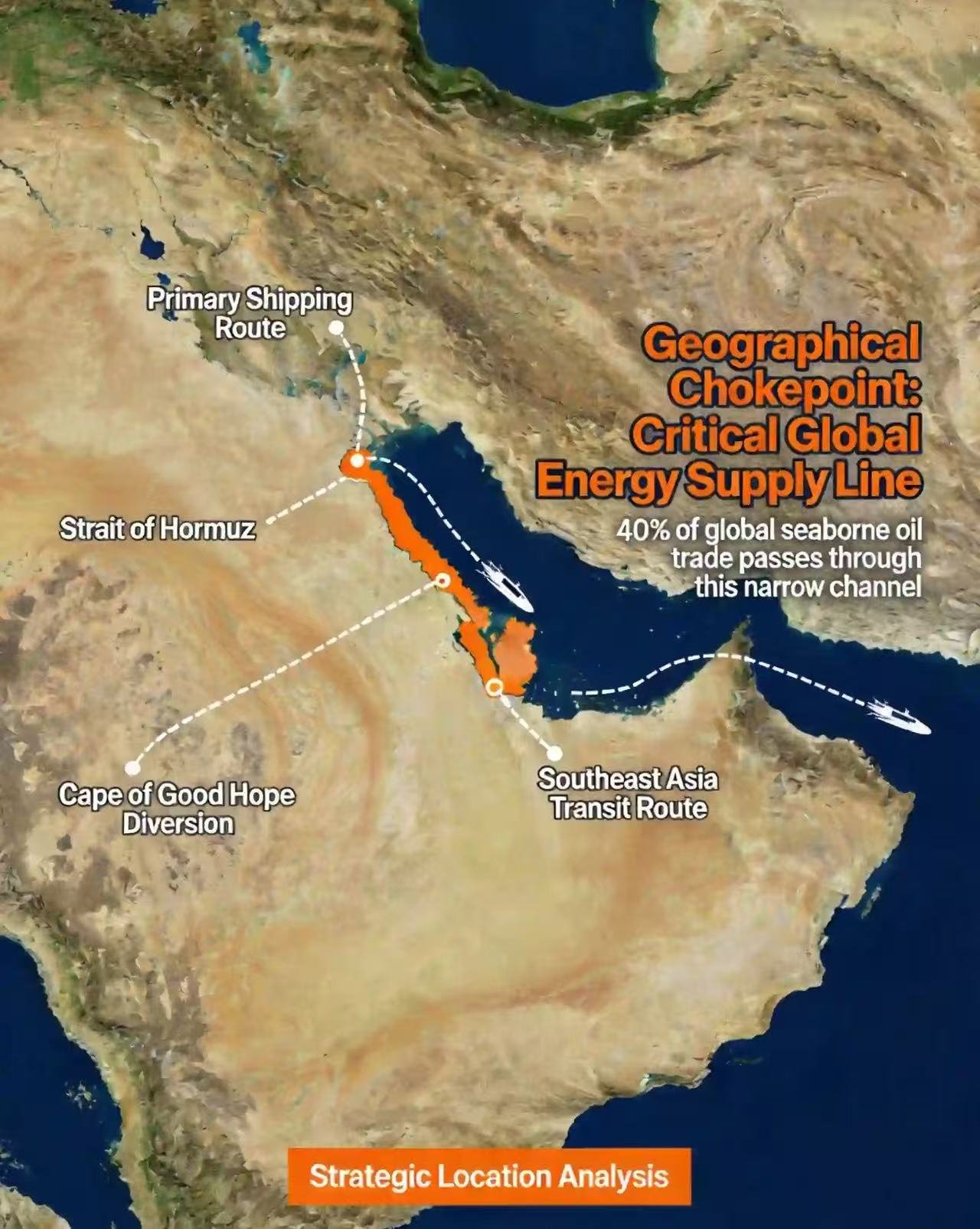
The Strait of Hormuz is known as the “World’s Oil Valve.” At its narrowest point only 33 kilometers wide, it carries:
- 20% of global oil trade
- 25% of seaborne oil
- Nearly 20% of liquefied natural gas transport
- Over 20 million barrels of crude oil daily
Direct Impact on China:
- China relies on nearly 4.8 million barrels of crude oil daily through this strait, accounting for 40% of total imports
- China-Iran annual trade volume exceeds $40 billion
- Traders in Yiwu and Guangdong have suspended shipments to the Middle East
II. Three Direct Impacts: What’s Happening to Your Cargo?
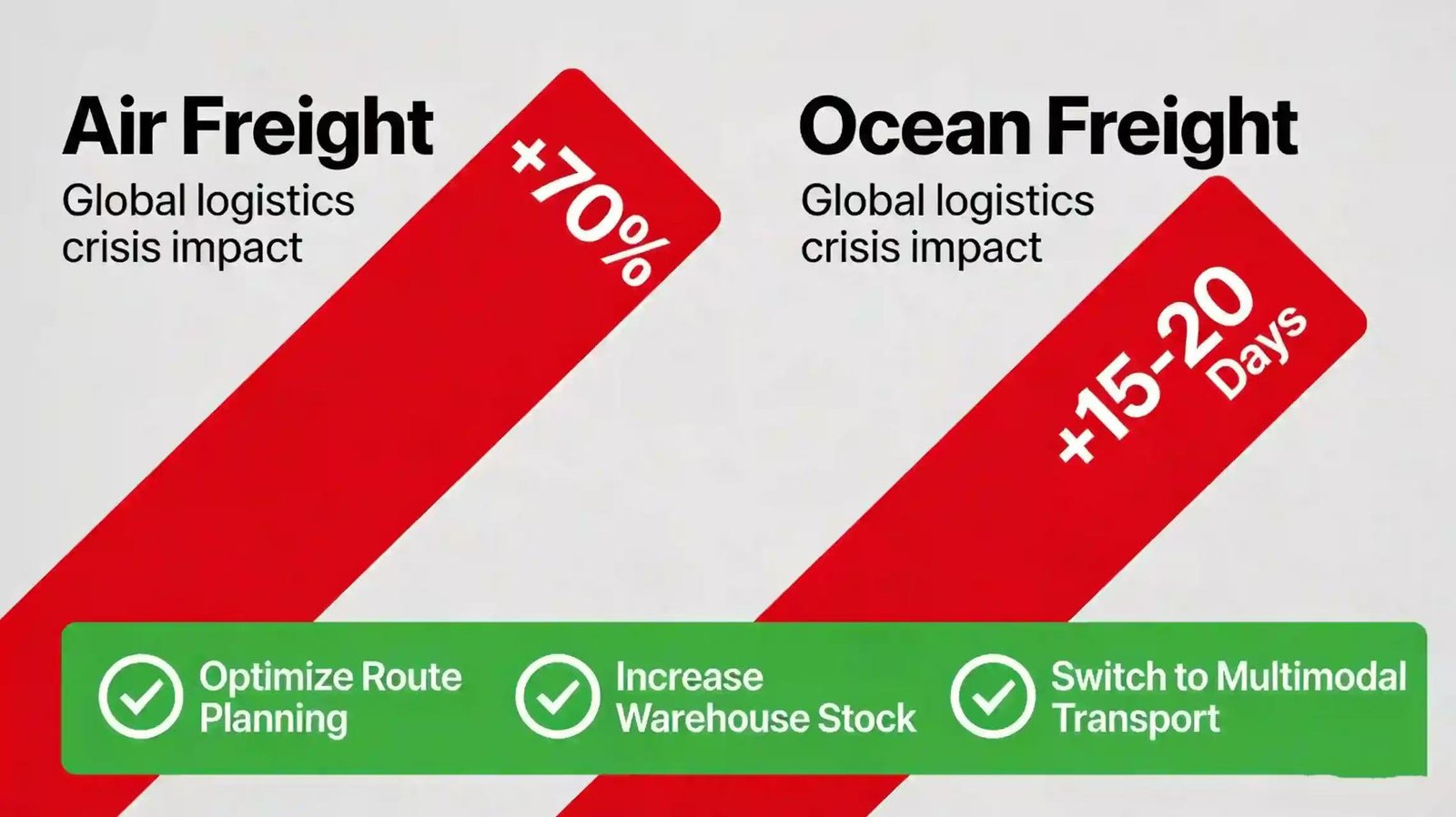
2.1 Air Freight Surges 70%, Capacity Crisis
Rate Explosion:
表格
| Route | Pre-Conflict | Current Rate | Increase |
|---|---|---|---|
| South Asia → Europe | $2.58/kg | $4.37/kg | +70% |
| South Asia → North America | $2.80/kg | $4.48/kg | +60% |
| China → Europe | ¥20/kg | ¥35/kg | +75% |
| China → USA | ¥20/kg | ¥32/kg | +60% |
Capacity Crisis:
- Cathay Pacific: Cargo flights to Dubai and Riyadh cancelled through April 30
- Qatar Airways: Scheduled cargo flights suspended, operating limited non-Doha routes only
- Traditional transit hubs like Dubai and Doha face restrictions, affecting approximately 10%+ of global air cargo capacity
Industry Feedback: “It’s no longer about price—there are essentially no cargo flights operating consistently. Flights run one day and stop the next.”
2.2 Ocean Freight Detours, Transit Times Extended 15-20 Days
Route Changes:
- 13 shipping lines suspended Middle East/Red Sea bookings
- Remaining routes detour via Cape of Good Hope, adding 15-20 days to transit time
- Capacity reduced by 30%-40%
Cost Surge:
- Ocean freight + war risk insurance + congestion fees increased 250%+ combined
- Additional thousands of dollars per container
- Persian Gulf region standard containers charged $1,500 war risk surcharge
- Insurance rates rose from 0.25% to 0.5% or even 1%
Port Paralysis:
- Jebel Ali Port (Middle East’s largest container port) suspended operations
- Jeddah Port at a standstill/congested
- Cargo stranded, schedules in chaos
2.3 Comprehensive Cost Escalation, Profit Margins Squeezed
Oil Price Transmission:
- China sources 50%+ of crude oil from the Middle East
- Oil prices breaking $100/barrel drives up plastics, synthetic fibers, aluminum, steel, and other raw material costs
- Shandong independent refineries saw operating rates drop 35% due to Iranian crude supply disruption
Profit Compression:
- Freight cost share jumped from 10% to over 20%
- For small and medium sellers with already thin margins, this directly threatens survival
III. Four Response Strategies: How to Navigate This Crisis
Strategy 1: Southeast Asia Transit Alternative ⭐ Recommended
Why Choose Southeast Asia?
The Strait of Hormuz crisis has minimal impact on Southeast Asia routes. Under RCEP, China-ASEAN trade continues to grow, making Southeast Asia the best alternative to Middle East routes.
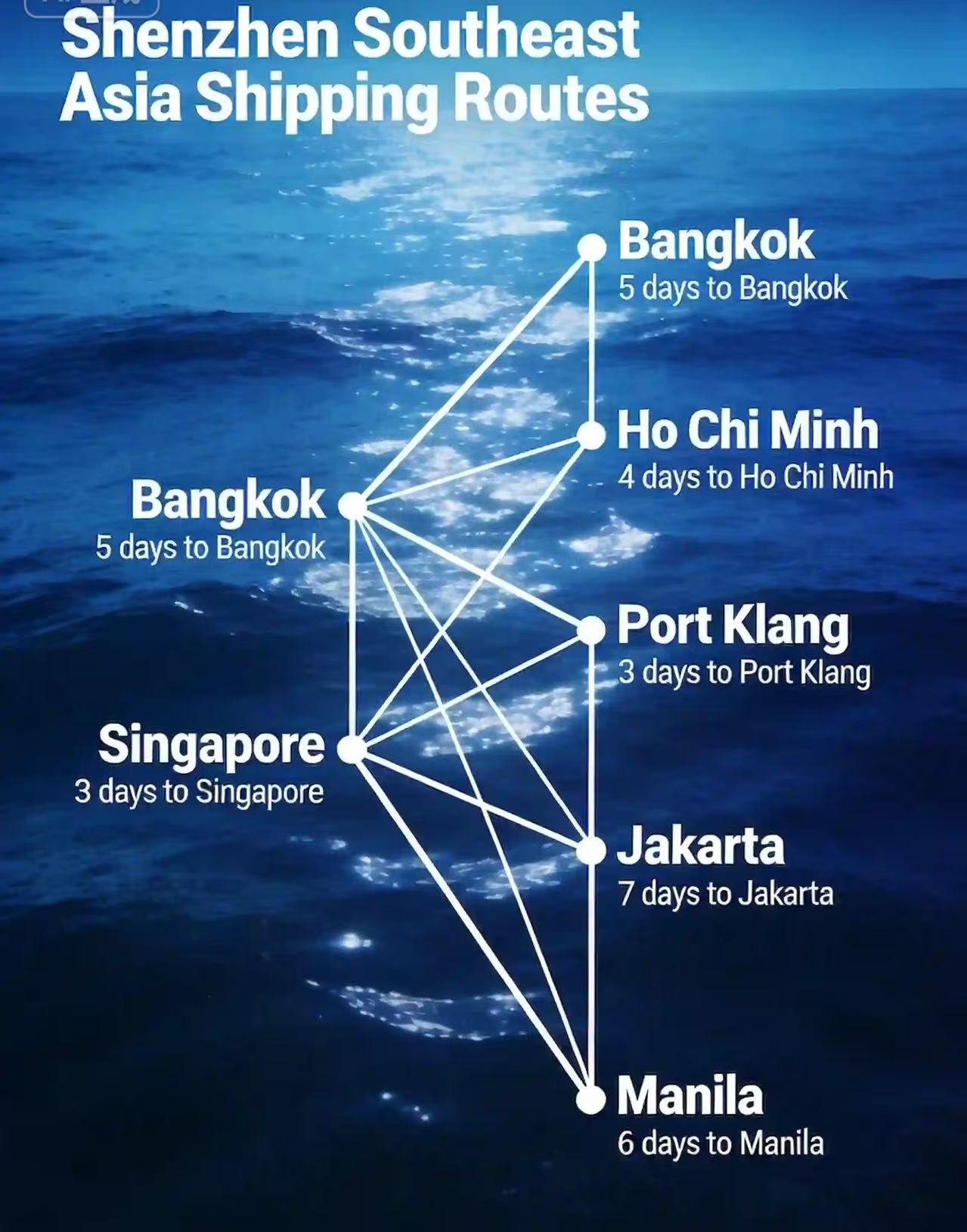 Specific Solutions:
表格
| Destination | Southeast Asia Transit Route | Transit Time | Cost Advantage |
|---|---|---|---|
| Europe | Shenzhen → Singapore → Rotterdam | 28-32 days | 7-10 days faster than Cape of Good Hope detour |
| Middle East | Shenzhen → Singapore → Dubai (pending recovery) | Depends on situation | Avoids Hormuz risk zone |
| Africa | Shenzhen → Singapore → Cape Town | 22-26 days | Stable capacity guarantee |
| South Asia | Shenzhen → Singapore → Mumbai | 12-15 days | Bypasses Persian Gulf |
RCEP Benefits:
- Trade between China and ASEAN countries continues rapid growth
- Southeast Asia has become one of the most important trading regions for Chinese businesses
- Thailand, Vietnam, Malaysia, Singapore, Indonesia, Philippines offer enormous market potential
Yinghua International Logistics Southeast Asia Service: 12+ years of industry expertise, direct carrier resources, stable FCL & LCL capacity, transparent pricing. Direct routes from Shenzhen to Thailand, Vietnam, Malaysia, Singapore, Indonesia, and Philippines with stable transit times and reliable customs clearance.
Strategy 2: Pre-position Inventory at Overseas Warehouses
European Direction:
- “Main warehouse + backup warehouse” layout in Europe
- Ocean freight + last-mile delivery combination
- Single shipment cost increases 15%, but delivery stability improves to 92%
Southeast Asia Direction:
- Singapore, Thailand, Malaysia overseas warehouse deployment
- First-mile ocean freight + local delivery model
- Dilutes overall logistics costs
Strategy 3: Shift to Ocean + Rail Combination
China-Europe Railway Alternative:
- China-Europe Railway Northern Line expansion
- Trans-Caspian transport corridor
- Central Asia-Europe land corridor
- Forms a “multi-route parallel” transport system
Transit Time Comparison:
表格
| Option | Transit Time | Cost | Suitable For |
|---|---|---|---|
| China-Europe Railway | 14-18 days | Medium | High-value, time-sensitive |
| Ocean via Cape of Good Hope | 45-50 days | Lower | Low-cost, non-urgent |
| Southeast Asia Transit | 28-32 days | Medium | Balance of time and cost |
Strategy 4: Reassess Middle East Market Value
Short-term Strategy:
- Suspend shipments, observe situation developments
- Maintain communication with Middle East customers, jointly develop contingency plans
- Clear existing inventory, recover capital
Long-term Strategy:
- Diversify market layout, reduce single-market dependency
- Shift capacity and marketing resources to Southeast Asia, Latin America, and other less-affected emerging markets
- Build supply chain resilience, establish multi-node backups
IV. Southeast Asia Routes: The Best Alternative to the Middle East
 IV. Southeast Asia Routes: The Best Alternative to the Middle East
4.1 Why Now Is the Right Time to Enter Southeast Asia
Policy Advantages:
- RCEP (Regional Comprehensive Economic Partnership) officially implemented
- China-ASEAN trade continues rapid growth
- Tariff reductions, enhanced trade facilitation
Market Demand:
- Southeast Asia has become one of the most important trading regions for Chinese businesses
- E-commerce market growth among the fastest globally
- Manufacturing relocation drives substantial raw material and equipment export demand
Logistics Advantages:
- Unaffected by Strait of Hormuz crisis
- Short routes, stable transit times
- Relatively stable freight rates
4.2 Transit Times from Shenzhen to Major Southeast Asian Ports
表格
| Destination Port | Ocean Freight Transit | Air Freight Transit | Flight Frequency |
|---|---|---|---|
| Bangkok (Thailand) | 5-7 days | 1-2 days | Multiple weekly |
| Ho Chi Minh City (Vietnam) | 4-6 days | 1 day | Multiple weekly |
| Port Klang (Malaysia) | 6-8 days | 1-2 days | Multiple weekly |
| Singapore | 5-7 days | 1 day | Multiple weekly |
| Jakarta (Indonesia) | 7-9 days | 1-2 days | Multiple weekly |
| Manila (Philippines) | 6-8 days | 1-2 days | Multiple weekly |
4.3 How to Choose a Reliable Southeast Asia Logistics Provider
Five Key Criteria:
- Direct Carrier Resources
- Direct carrier, not secondary agent
- Stable capacity, guaranteed peak season
- Transparent pricing, no hidden fees
- Customs Clearance Capability
- Familiar with each country’s customs policies
- AEO-certified companies preferred
- Low inspection rates
- End-to-End Tracking
- Real-time cargo location
- Proactive anomaly alerts
- Dedicated customer service
- 12+ Years Industry Experience
- Rich experience, strong emergency response
- Comprehensive resource network
- Solid reputation
- Value-Added Services
- Door-to-door service
- Customs declaration and inspection
- Warehousing and distribution
V. Action Checklist: What to Do Now
Immediate Check (Within 24 Hours)
- Inventory existing Middle East orders, assess impact level
- Contact freight forwarder to confirm current capacity status
- Communicate with Middle East customers, explain situation and negotiate solutions
Immediate Adjustment (This Week)
- Re-evaluate quotations, adjust delivery commitments
- Explore alternative markets like Southeast Asia, Latin America
- Consider overseas warehouse pre-positioning
Long-term Planning (Next 3-6 Months)
- Diversify market layout, reduce single-market dependency
- Build supply chain resilience, establish multi-node backups
- Establish long-term partnership with reliable logistics providers
VI. Frequently Asked Questions
Q1: How Long Will the Strait of Hormuz Crisis Last?
Answer: According to expert analysis, there are three possible scenarios:
- Pullback from the Brink (30% probability) : Both sides compromise, Iran partially opens the strait, oil prices quickly retreat
- Limited Conflict (50% probability) : US airstrikes Iranian facilities, Iran blocks the strait, oil prices surge past $180
- Full-Scale War (20% probability) : Conflict escalates, strait completely closed, oil prices break $200
Recommend preparing for 3-6 months of sustained impact.
Q2: What If I Have Cargo Currently in Transit?
Answer:
- Immediately contact your freight forwarder to confirm cargo location
- If in the Persian Gulf region, monitor whether port diversion or detention is needed
- Assess whether insurance covers war risk
- Prepare contingency plans, including rerouting or waiting
Q3: Are Southeast Asia Routes Really Unaffected?
Answer: Southeast Asia routes are completely unaffected by the Strait of Hormuz. Cargo departs from Chinese ports, travels through the South China Sea directly to Southeast Asian countries, with short routes, stable transit times, and steady freight rates. Under RCEP, China-ASEAN trade continues to grow, making it the best alternative to Middle East markets.
Q4: How Can I Quickly Pivot to the Southeast Asia Market?
Answer:
- Logistics Level: Choose a forwarder with Southeast Asia specialist experience, such as Yinghua International Logistics, offering stable capacity services from Shenzhen direct to Thailand, Vietnam, Malaysia, Singapore, Indonesia, Philippines
- Market Level: Leverage RCEP tariff advantages to develop Southeast Asian customers
- Product Level: Research Southeast Asian market demand, adjust product strategy
Conclusion: Opportunity Within Crisis
The Strait of Hormuz crisis has brought massive disruption to global logistics, but crises often contain opportunities. For Chinese trading companies, this is:
- An opportunity to reassess market layout
- A catalyst to build supply chain resilience
- An accelerator to open new Southeast Asian markets
Yinghua International Logistics has over 12 years of Southeast Asia shipping experience. As a direct carrier for Thailand, Vietnam, Malaysia, Singapore, Indonesia, and Philippines routes, we provide FCL and LCL services with stable capacity and transparent pricing. We’re committed to providing you with a smooth, worry-free shipping experience.
Add Your Heading Text Here
Lorem ipsum dolor sat amet,consectetur adipiscing elit。 Ut elittellus,luctus nec ullamcorper mattis,pulvinar dapibus leo。