FCL vs LCL Shipping: Which is Better for Your Business?
FCL vs LCL Shipping: A Complete Guide for Importers
When shipping goods from China, choosing between FCL vs LCL shipping is one of the most important decisions you’ll make. The wrong choice can mean unnecessary costs or delays. In this guide, we break down the differences, benefits, and ideal use cases for each shipping method.
What is FCL Shipping?
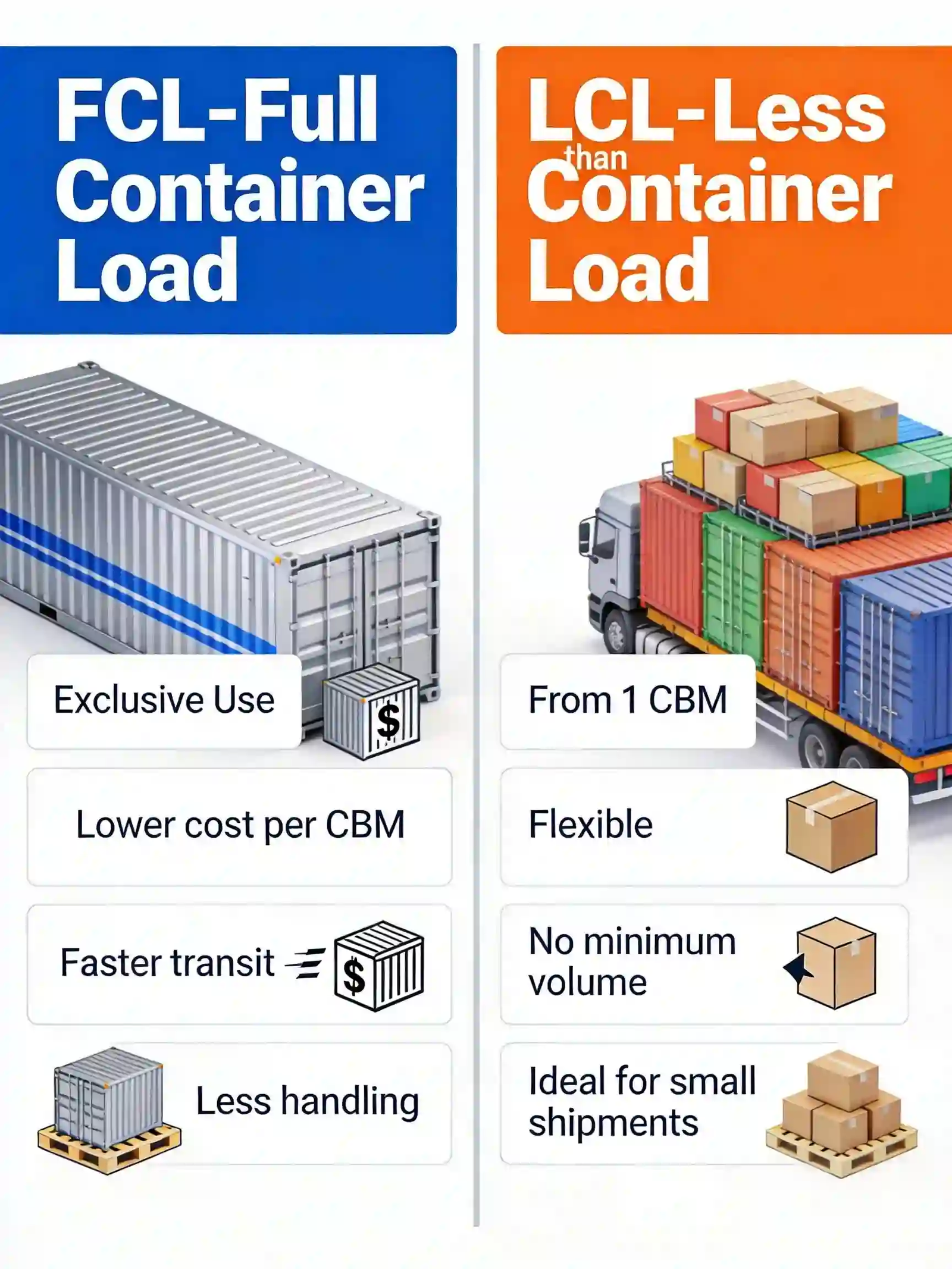
FCL (Full Container Load) means you book an entire shipping container exclusively for your cargo. No other shippers’ goods are mixed with yours.
FCL Container Options
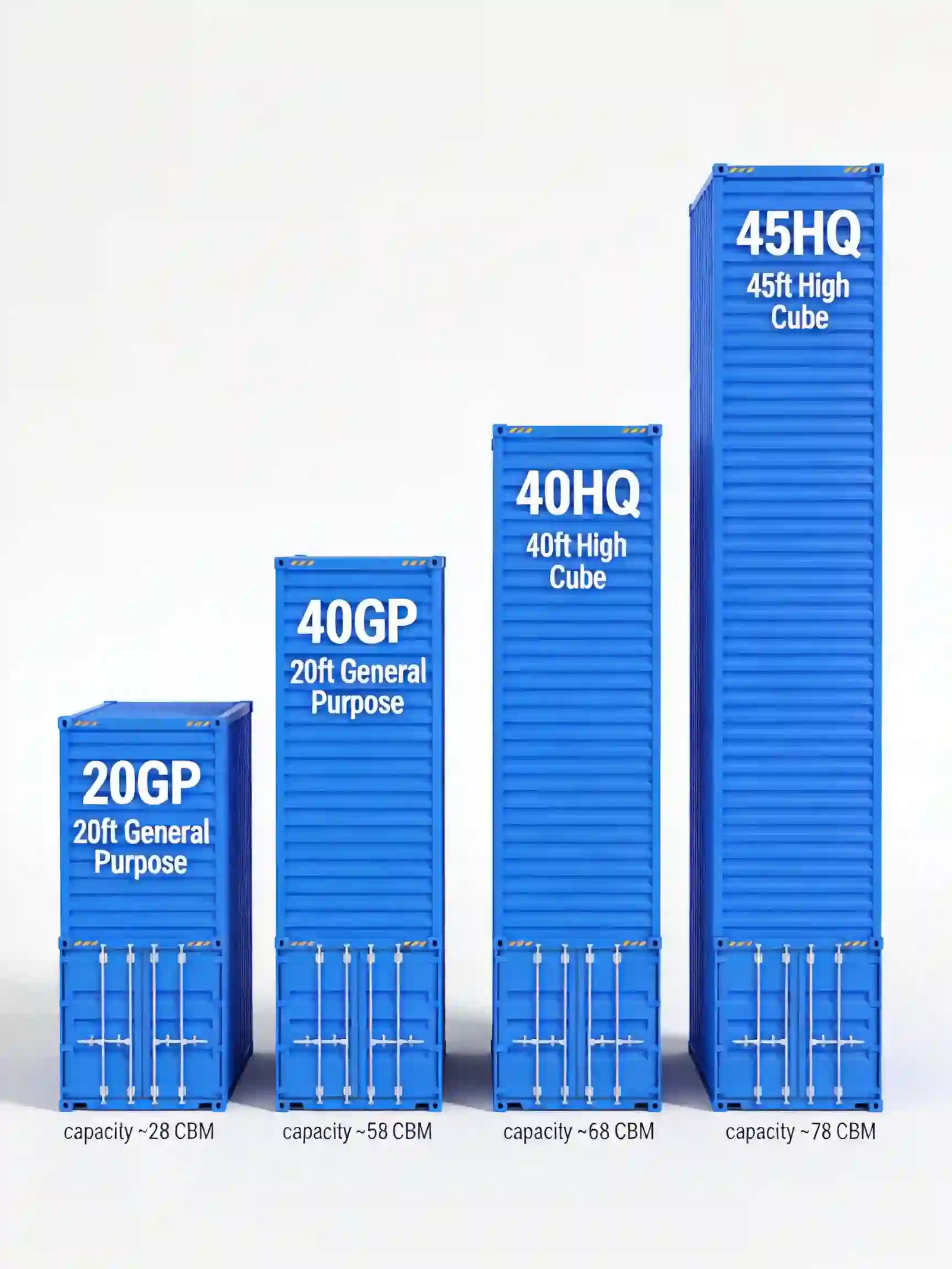
- 20GP (20-foot General Purpose): ~28 CBM capacity
- 40GP (40-foot General Purpose): ~58 CBM capacity
- 40HQ (40-foot High Cube): ~68 CBM capacity
- 45HQ (45-foot High Cube): ~78 CBM capacity

When to Choose FCL
FCL shipping is ideal when:
- Your cargo volume exceeds 15 CBM
- You ship regularly with consistent volumes
- Cargo requires special handling (fragile, hazardous, temperature-controlled)
- You need faster transit with fewer handling points
- Cargo value is high and you want minimal risk exposure
FCL Advantages
- Lower per-unit cost at higher volumes
- Faster transit with direct container loading
- Fewer handling points = reduced damage risk
- More secure with single-shipper seal
- Better scheduling with dedicated container availability
FCL Considerations
- Requires minimum volume commitment
- Higher absolute cost for smaller shipments
- Container utilization matters for cost efficiency

What is LCL Shipping?
LCL (Less than Container Load) allows multiple shippers to share a single container. Your goods are consolidated with others heading to the same destination port.
LCL Key Facts
- Minimum shipment: typically 1 CBM or 100kg
- Your cargo shares container costs with other shippers
- Consolidation occurs at origin freight station (CFS)
- Deconsolidation occurs at destination CFS
When to Choose LCL
LCL shipping works best when:
- Your shipment is under 15 CBM
- You have irregular shipping volumes
- Testing new markets with smaller orders
- Budget constraints prevent full container booking
- Multiple suppliers need consolidated shipping
LCL Advantages
- Lower upfront cost for smaller shipments
- Flexibility to ship as needed
- No volume commitment required
- Access to major ports even for small quantities
- Ideal for market testing and sample shipments
LCL Considerations
- Higher per-unit cost compared to FCL at equivalent volumes
- Additional handling at consolidation points
- Potentially longer transit times
- Packing quality critical to prevent damage
FCL vs LCL: Cost Comparison
Cost Breakpoints
| Volume | Recommended Method | Rationale |
|---|---|---|
| Under 5 CBM | LCL | FCL cost unjustifiable |
| 5-15 CBM | LCL (often) | Compare per-CBM rates |
| 15-25 CBM | FCL or LCL | Break-even point to evaluate |
| Over 25 CBM | FCL | Clear cost advantage |
Total Cost Factors
Beyond freight rates, consider:
- CFS charges (LCL only): consolidation/deconsolidation fees
- Terminal handling at origin and destination
- Customs brokerage fees
- Last-mile delivery costs
- Cargo insurance premiums
Making the Right Choice: FCL vs LCL
Choose FCL When:
- Your annual shipping volume justifies container commitment
- Product quality and reduced handling matter
- You need consistent, predictable scheduling
- Cargo includes sensitive or high-value items
Choose LCL When:
- Shipping volumes vary significantly
- Testing new product lines or markets
- Startup phase with limited capital
- Frequent small orders from multiple suppliers
Partner with Experts
At Yinghua Logistics, we help businesses make optimal shipping decisions based on your specific cargo, volume patterns, and budget requirements. Our team provides:
- Volume analysis to identify cost-saving opportunities
- FCL and LCL options for all Southeast Asian routes
- Transparent pricing with no hidden fees
- Expert consolidation services for LCL shipments
Contact Yinghua Logistics today for expert advice on choosing the right shipping method for your cargo.

FCL vs LCL: Cost Comparison